

Hey Friends 👋 Happy Wednesday
Here’s another weekly dose of AI ways of working.
You spend your day juggling different hats. One moment you’re a project manager, the next a data analyst, and the next a content strategist. Each role has its own set of tools, its own context, and its own cognitive load. The constant switching is exhausting. The manual, repetitive work of moving information between applications feels like a tax on your productivity. What if you could build an automated operating environment that manages this context for you, freeing you up to focus on the high-judgement work that truly matters?
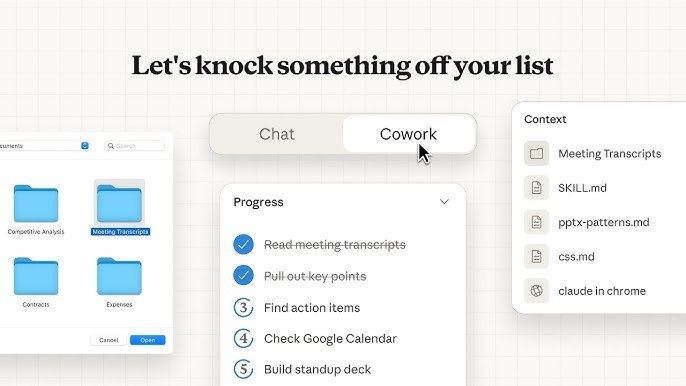
This is the promise of Claude Cowork, a new tool from Anthropic that’s empowering non-technical operators to build agentic workflows that automate the tedious, manual tasks that consume their days. This isn’t just another chatbot. It’s a fundamental shift in how we interact with our digital workspaces.
Why Claude Cowork (Not ChatGPT)
ChatGPT and other browser-based chat models are powerful tools for generating text, but they’re fundamentally limited by their inability to interact with your local files and applications. You’re still the one responsible for copy-pasting information, managing context, and executing tasks.
Claude Cowork, on the other hand, is designed to be an active participant in your workflow. It operates directly on your computer, within the folders you specify, and can interact with your applications through a growing ecosystem of connectors. This distinction is crucial.

This is the difference between an assistant that can write a report for you and an assistant that can research the report, write it, and save it to the correct project folder. It’s the shift from manual tool-juggling to an automated, agentic workflow.
Beyond the Case Study: How Other Businesses Are Using Cowork
While Dr Pean’s story is a powerful example of individual productivity, the applications of Claude Cowork extend far beyond a single user. Across various industries, businesses are discovering new ways to leverage this technology to streamline operations, enhance creativity, and unlock new efficiencies.
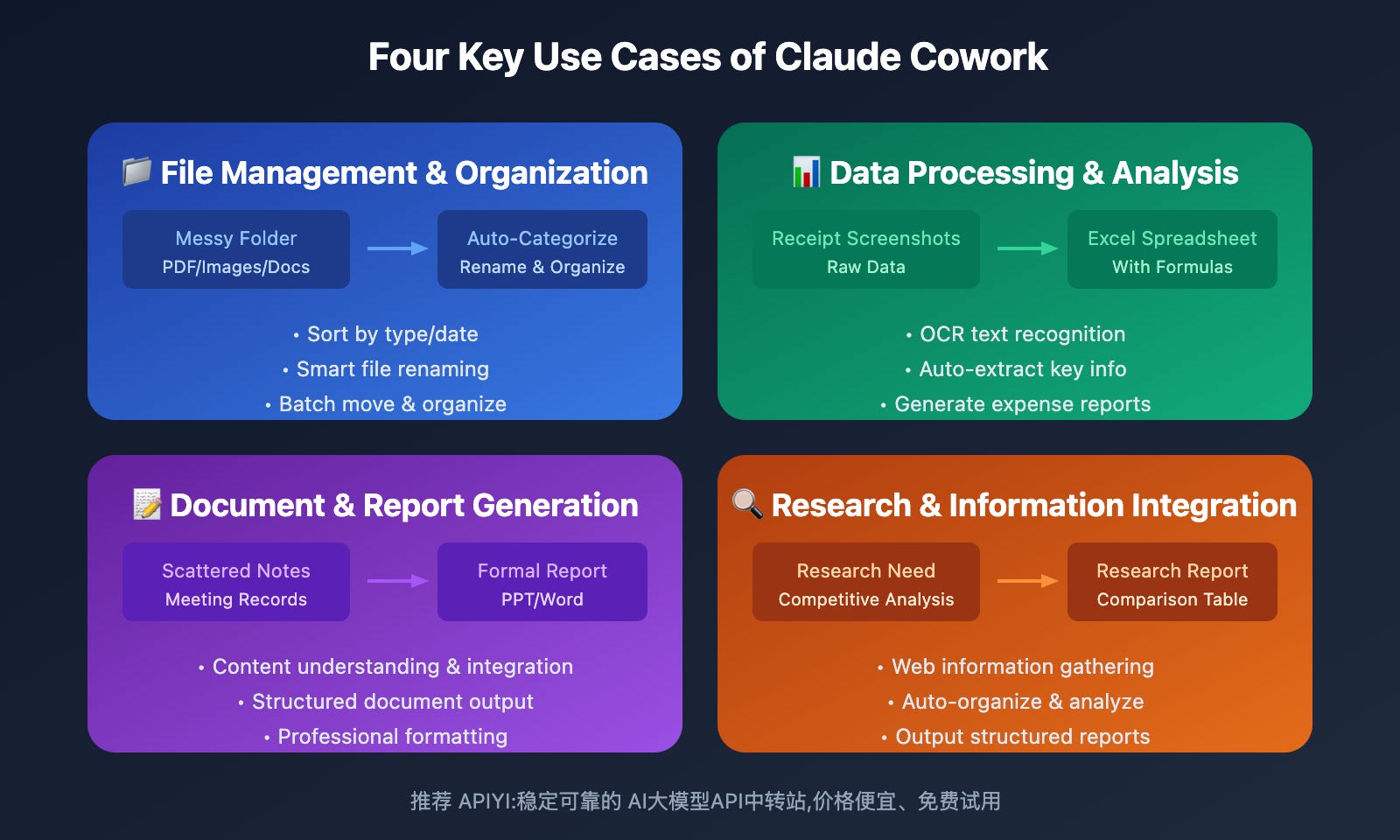
For instance, marketing teams are using Cowork to automate the entire content lifecycle, from initial research and content creation to distribution and performance analysis. A single prompt can trigger a workflow that generates a blog post, creates social media snippets, designs accompanying graphics, and schedules the content for publication across multiple platforms. This frees up marketers to focus on strategy and creative ideation, rather than getting bogged down in the mechanics of content production.
In the legal field, paralegals and legal assistants are using Cowork to accelerate document review and analysis. By pointing Cowork to a folder of case files, they can quickly extract key information, identify relevant precedents, and generate summaries of complex legal documents. This not only saves countless hours of manual work but also reduces the risk of human error.
Even in traditionally non-technical fields like real estate, agents are using Cowork to automate the creation of property listings, market analysis reports, and client communications. By simply providing a few key details about a property, Cowork can generate a compelling listing description, pull relevant market data, and draft personalised emails to potential buyers.
These are just a few examples of how businesses are using Claude Cowork to transform their operations. The common thread is a shift away from manual, repetitive tasks and towards a more automated, agentic way of working. As the technology continues to evolve, we can expect to see even more innovative use cases emerge, further blurring the lines between technical and non-technical roles.
Case Study: The Surgeon, the CEO, and the Automated Operating Environment
To understand the transformative potential of Claude Cowork, let’s look at the real-world use case of Dr Christian Pean, an orthopaedic trauma surgeon, academic, and CEO of a health tech startup. Dr Pean was struggling with the cognitive overhead of switching between his multiple professional “pillars,” as he calls them. His challenge wasn’t a lack of time, but the mental tax of constantly shifting contexts.
“The question I’ve been asking is not ‘how do I do more?’ but rather ‘how do I offload the mechanical work so that my limited attention goes to decisions that require judgement?’”
Dr Pean found his answer in Claude Cowork. By structuring his digital workspace around Cowork’s folder-based operation, he was able to create an automated operating environment that manages the context of his different roles. This is the key insight: Cowork isn’t just a chatbot, but a system that operates within your existing file structure.
The 6:15 AM Dispatch: Five Parallel Workflows Before Breakfast
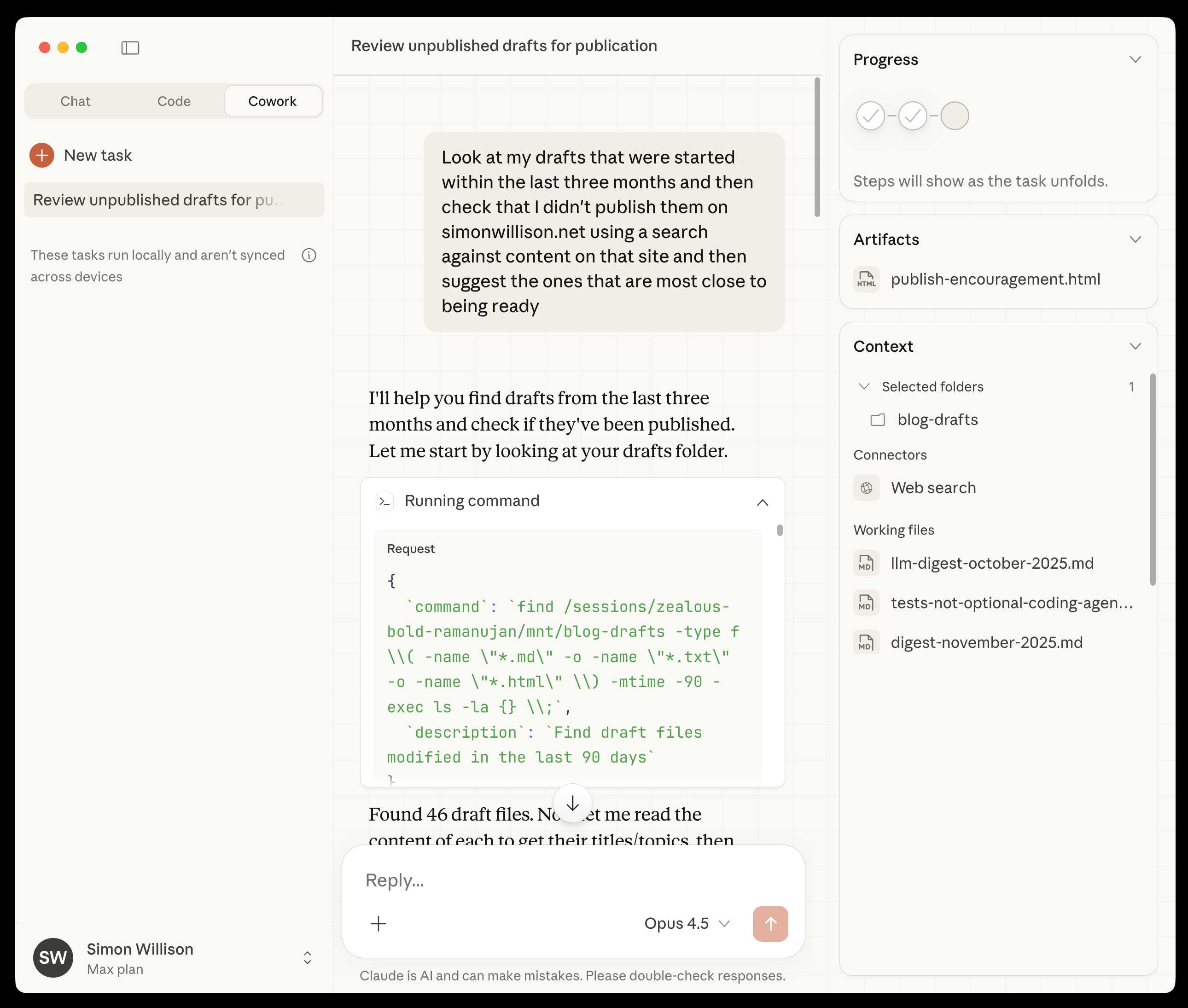
Dr Pean’s morning ritual is a powerful demonstration of this new paradigm. At 6:15 AM, he dispatches five complex tasks to Claude Cowork in parallel, and then steps away to focus on his morning routine. When he returns, the deliverables are waiting for him.
Here are the five tasks he automates. Email Triage and Response Drafting: Cowork scans his inbox, prioritises important tasks, and drafts responses to straightforward emails. Presentation Preparation: It reviews existing PowerPoint files in a project folder and creates a structured outline for a new presentation. Content Calendar Planning: It searches the web for relevant stories and organises them into a branded HTML content calendar for his Substack newsletter. Downloads Folder Organisation: It categorises and files months of accumulated downloads into their relevant project folders. Deep Research Report: It analyses a complex industry report and creates an interactive HTML brief, complete with citations, tailored to his company’s specific needs.
This isn’t science fiction. This is what’s possible today for non-technical operators who are willing to rethink their workflows. Dr Pean isn’t writing code. He’s using natural language to direct an AI agent to perform complex, multi-step tasks.
“The output isn’t something you copy-paste from a chat; it’s real, editable documents living where you need them. For someone juggling clinical, company, and content work across dozens of file types, this changes the utility equation entirely.”
What You’ve Built: A New Way of Working
By embracing this new paradigm, you’re not just automating tasks. You’re building a new way of working. You’re shifting from a reactive, tool-juggling approach to a proactive, agentic one. You’re creating an automated operating environment that manages context, offloads manual work, and frees you up to focus on what you do best: making high-judgement decisions.
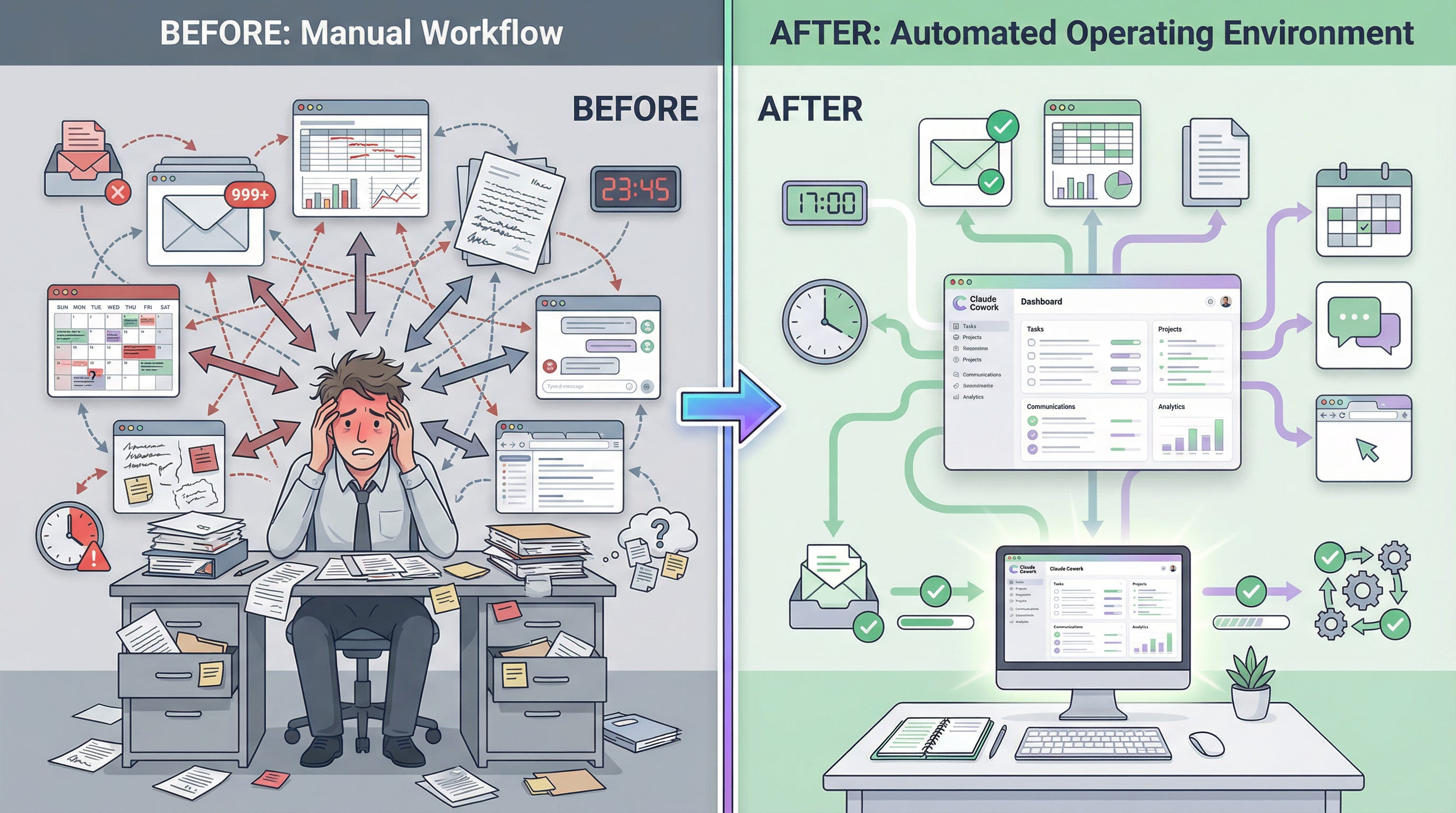
The transformation is stark. Before, you were manually switching between a dozen different applications, losing time and focus to context switching, and wasting hours on repetitive, low-value tasks. After, you have a single interface to manage all your workstreams, an AI agent that manages context for you, and hours of your time reclaimed each week.
The impact of this shift is profound. As Dr Pean notes, “Parallel execution changes the calculus. When you can dispatch five tasks in five minutes and return to deliverables an hour later, your relationship to ‘busy work’ fundamentally shifts.”
What to Build Next
Once you’ve started to build your own automated operating environment, the possibilities are endless. You could create a workflow that monitors your competitors’ websites, social media, and news mentions, and delivers a weekly intelligence briefing to your inbox. You could build a system that automatically organises your contacts, tracks your interactions, and reminds you to follow up with important connections. You could design a workflow that transcribes your meetings, summarises the key decisions and action items, and distributes the notes to all attendees.
Get Started
Welcome to the new paradigm. AI Ops isn’t about replacing what you do, it’s about amplifying what you already know. Your context management skills, your process knowledge, your understanding of how work actually flows, these are the foundations that matter now.
Join a growing community of Project Managers, Operators, and Founders who are building the future of work. Selective insights and tutorials on AI Ops, delivered to operators who understand that context beats code.